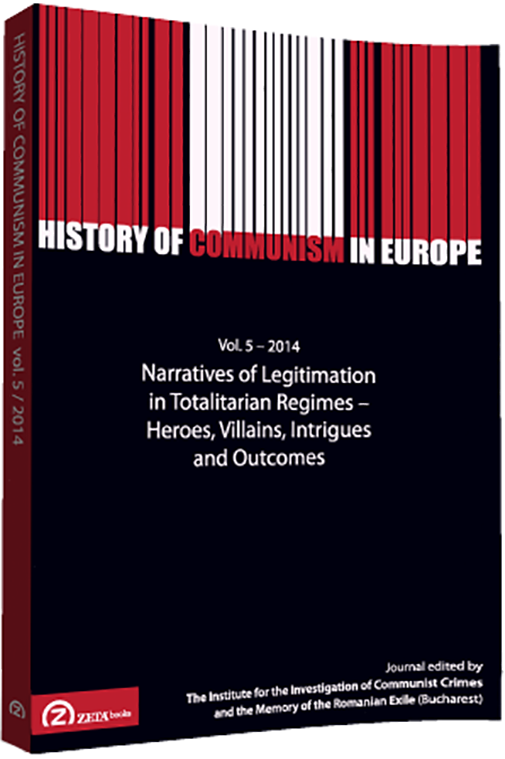
History of communism in Europe: Vol. 5 / 2014 | Dalia Bathory, Various Authors
44,00 lei
Ai ajuns la un produs concret. Îți pot spune rapid dacă merită, ce avantaje are și ce alternative similare găsești mai ușor.
Pe scurt: TABLE OF CONTENTSARGUMENTDalia BATHORY: Weaving the Narrative Strings of the Communist Regimes – Building Society with Bricks of StoriesAbstract: The long duration of the Communist regime cannot be explained without clo…
- Îți pot recomanda rapid produse similare sau alternative mai bune din aceeași zonă.
- Dacă nu e exact ce cauți, putem restrânge imediat opțiunile în funcție de preț, utilizare sau stil.
- Poți deschide oferta din magazin sau poți continua aici conversația pentru comparații și recomandări.
Detalii despre produs
TABLE OF CONTENTSARGUMENTDalia BATHORY: Weaving the Narrative Strings of the Communist Regimes – Building Society with Bricks of StoriesAbstract: The long duration of the Communist regime cannot be explained without closely looking at the manners of creating shared meanings and agreement on explanations on the shared historical context. Narratives of legitimation, some easier to depict than others, were almost as important as the use of force in imposing the specifi c values of the regime. In other words, soft power was the buttress of hard power. But the nuances are numerous, once we put this otherwise obvious remark under closer scrutiny. The case studies presented in this issue of the yearbook underline the practice of combining soft power with hard power: that is, legitimating narrative discourses transmitting sets of values and beliefs, backed up by policies of various forms of violence.I. HEROES AND VILLANS – DEVELOPING THE CHARACTERSStefan BOSOMITU: Becoming in the Age of Proletariat. The Identity Dilemmas of a Communist Intellectual throughout Autobiographical Texts. Case Study: Tudor BugnariuAbstract: Romanian historiography generally states that in Communist Romania there was no intellectual capable of stimulating a “heresy” comparable to those in Yugoslavia (Milovan Djilas), Hungary (Gyorgy Lukacs) or Poland (Adam Schaff ). This is almost true. While the Romanian Communist/Workers Party (RCP/RWP) despised intellectuals, even if they were docile and obedient, in the upper echelons of the RCP/RWP one could hardly fi nd true intellectuals. However, there were some cases that can challenge this narrative – Lucretiu Patrascanu, Grigore Preoteasa, Miron Constantinescu or Tudor Bugnariu. My paper will discuss the case of Tudor Bugnariu, one of the intellectuals seduced by the communist project and ideology in interwar Romania, who later managed to occupy important offi ces within the RCP/RWP and the state structures. By analyzing the narratives of Tudor Bugnariu’s several autobiographical texts, my paper will examine and explain his becoming and the construction of his self-identity and of his “revolutionary” self.Renata KIRIN: Yugoslav Women Intellectuals: From a Party Cell to a Prison CellAbstract: The Yugoslav socialist framework enabled major advances in what concerns the legal, economic and social equality of women, advances which radically changed their traditionally subordinated family and social position. In spite of the postwar period of revolutionary enthusiasm, female political activism and the access of women intellectuals to the male-dominated spheres of journalism, diplomacy, administration and governmental offi ces did not exist for long. Taking into account memoirs and oral histories of fi ve distinguished women, the article reveals the reasons for the Party’s antifeminist attitudes: a) the political fear of ambitious female “quality staff ”; b) the ideological fear of the women guardians of the traditional and religious foundations of collective identity; c) a cultural mistrust toward the mobile woman who easily transcends family, social and ethnic boundaries. These biographical sources reveal that any attempt at free thought and autonomous action outside of the party line was severely punished.II. NARRATIVES OF LEGITIMATIOIN – FROM REALITY TO FICTION THROUGH ARTSBarbara LOACH: Topographies of Identity and Memory: Berlin’s...
Produse similare pe care le poți explora
Times Literary Supplement nr.6071/august 2019 |
Fara descriere
26,00 lei

Revista romana de comunicare si relatii publice nr. 17 / 2008 |
Revista Romana de Comunicare si Relatii Publice (RRCRP) este un periodic academic interdisciplinar care publica articol…
25,53 lei

Belgian Trappist and Abbey Beers: Truly Divine | Jef Van den Steen
Belgian beer expert Jef Van den Steen looks at the history and production of all thirty Belgian abbey beers.This book i…
318,00 lei

Bitten by the Blues : The Alligator Records Story | Bruce Iglauer, Patrick A. Roberts
It started with the searing sound of a slide careening up the neck of an electric guitar. In 1970, twenty-three-year-ol…
127,00 lei

Africa Drawn: One Hundred Cities | Gary White, Marguerite Pienaar, Bouwer Serfontein
Africa - a continent of small villages in the jungle and savannah? Certainly not. The urbanisation of the continent is…
221,00 lei

Michael Borremans: Fire from the Sun | Michael Bracewell
Known for his ability to recall classical painting, both through technical mastery and subject matter, Borremans’s depi…
161,00 lei