
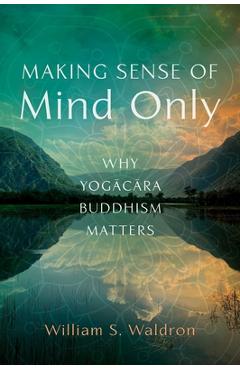
Making Sense of Mind Only: Why Yogacara Buddhism Matters - William S. Waldron
162,00 lei180,00 lei
Ai ajuns la un produs concret. Îți pot spune rapid dacă merită, ce avantaje are și ce alternative similare găsești mai ușor.
Pe scurt: Through engaging, contemporary examples, Making Sense of Mind Only reveals the Yogacara school of Indian Buddhism as a coherent system of ideas and practices for the path to liberation, contextualizing its key texts and…
- Dacă nu e exact ce cauți, putem restrânge imediat opțiunile în funcție de preț, utilizare sau stil.
- Poți deschide oferta din magazin sau poți continua aici conversația pentru comparații și recomandări.
Detalii despre produs
Produse similare pe care le poți explora

The Spirit of Terrorism: And Other Essays - Jean Baudrillard
Baudrillard sees the power of the terrorists as lying in the symbolism of slaughter--not merely the reality of death, b…
118,75 lei 131,94 lei
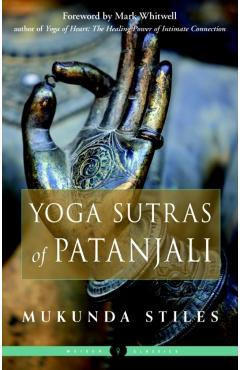
Yoga Sutras of Patanjali - Mukunda Stiles
Whitwell, Mark: - Mark Whitwell has taught yoga for over three decades throughout the US, Asia, Europe, Australia, and…
97,14 lei 107,93 lei

Kierkegaard's Writings, XX, Volume 20: Practice in Christianity - Søren Kierkegaard
\n \nOf the many works he wrote during 1848, his richest and most fruitful year, Kierkegaard specified Practice in Chri…
222,92 lei 247,69 lei

Kierkegaard's Writings, VII, Volume 7: Philosophical Fragments, or a Fragment of Philosophy/Johannes Climacus, or de Omnibus Dubitandum Est. (Two Book - Søren Kierkegaard
\n \nThis volume contains a new translation, with a historical introduction by the translators, of two works written un…
334,80 lei 372,00 lei

The Psychiatric Writings from Alienation and Freedom - Frantz Fanon
Khalfa, Jean: - Jean Khalfa is a Senior Lecturer in French Studies at Trinity College Cambridge, UK. He is the editor o…
168,94 lei 187,71 lei

The Prince - Niccol� Machiavelli
\n \nUnabridged value reproduction of THE PRINCE, by Niccolo Machiavelli and translated by N. H. Thomson for a Harvard…
37,12 lei 41,25 lei