
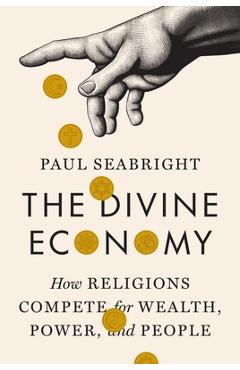
The Divine Economy: How Religions Compete for Wealth, Power, and People - Paul Seabright
220,32 lei244,80 lei
Ai ajuns la un produs concret. Îți pot spune rapid dacă merită, ce avantaje are și ce alternative similare găsești mai ușor.
Pe scurt: \nLonglisted for the Financial Times and Schroders Business Book of the Year Award \n \nA novel economic interpretation of how religions have become so powerful in the modern world \n \nReligion in the twenty-first cent…
- Îți pot recomanda rapid produse similare sau alternative mai bune din aceeași zonă.
- Dacă nu e exact ce cauți, putem restrânge imediat opțiunile în funcție de preț, utilizare sau stil.
- Poți deschide oferta din magazin sau poți continua aici conversația pentru comparații și recomandări.
Detalii despre produs
Produse similare pe care le poți explora

Full Surrogacy Now: Feminism Against Family - Sophie Lewis
\nWhere pregnancy is concerned, let every pregnancy be for everyone. Let us overthrow, in short, the family \nThe surro…
77,15 lei 85,72 lei

Halfway Home: Race, Punishment, and the Afterlife of Mass Incarceration - Reuben Jonathan Miller
\n \nA persuasive and essential (Matthew Desmond) work that will forever change how we look at life after prison in Ame…
130,89 lei 145,43 lei

Limits to Medicine: Medical Nemesis: The Expropriation of Health - Ivan Illich
\nThe medical establishment has become a major threat to health. This is the opening statement and basic contention of…
158,59 lei 176,21 lei

Reproductive Justice, Volume 1: An Introduction - Loretta Ross
\nReproductive Justice is a first-of-its-kind primer that provides a comprehensive yet succinct description of the fiel…
246,24 lei 273,60 lei

Washington Myths and Legends: The True Stories behind History's Mysteries, 2nd Edition - Lynn Bragg
\nTales of intrigue in this book include unusual unsolved crimes, legends of lost treasure, spine-tingling ghost storie…
100,89 lei 112,10 lei

Die Wise - Stephen Jenkinson
\nDie Wise does not offer seven steps for coping with death. It does not suggest ways to make dying easier. It pours no…
136,08 lei 151,20 lei